SARA GUERNAY
Necklaces, lengths and necklines: finding your balance
An open shirt, round neck or knit creates a different setting. Find references for lengths, motifs and layering.
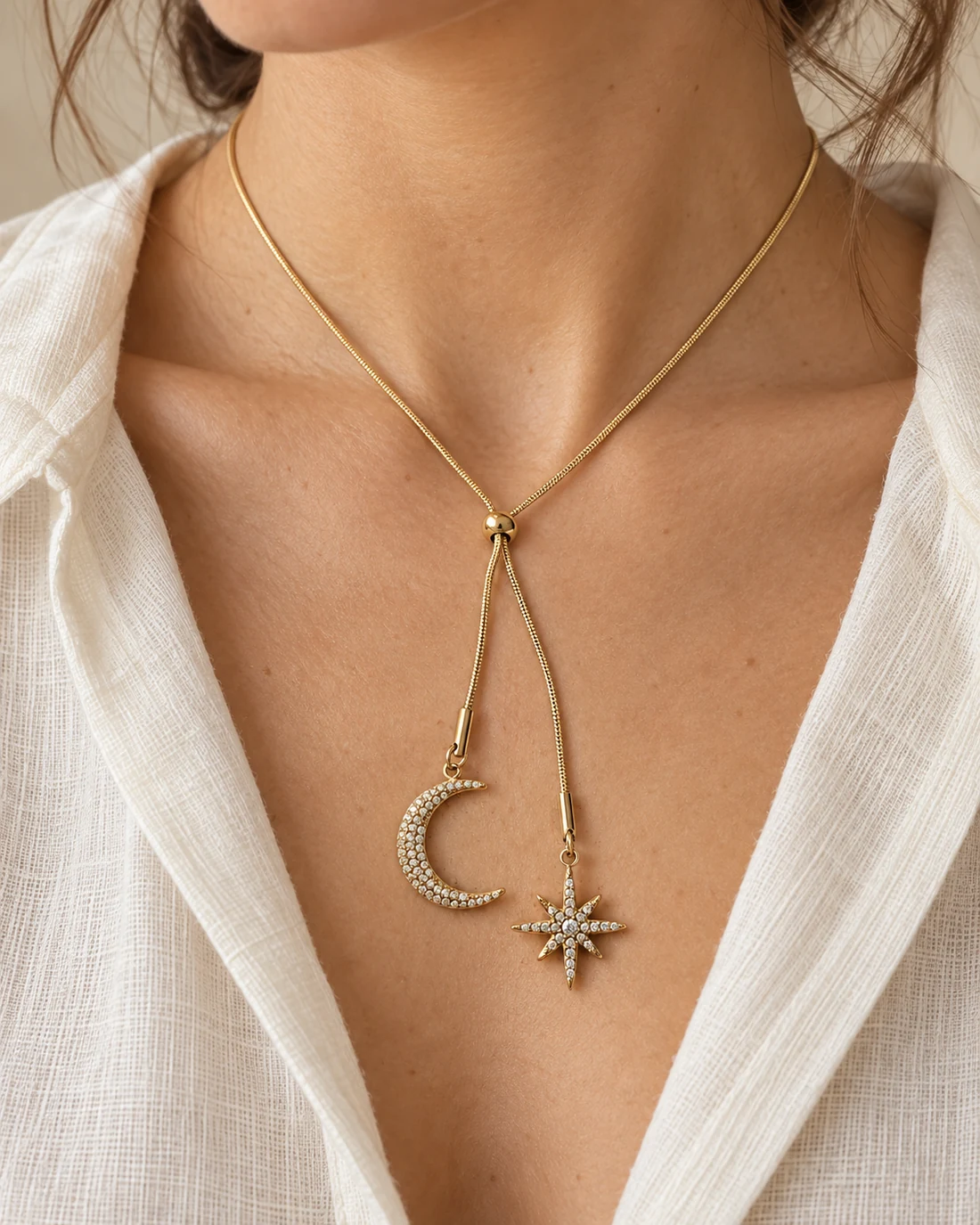
A necklace meets the collar of a shirt, follows an open neckline or stands out against knitwear. Its effect comes from more than the pendant alone: length, volume and the space around the design influence the whole outfit. Start with the top you want to wear, then consider the line you would like to create.
The 316L steel necklaces and freshwater pearl necklaces offer fine chains, motifs and pearl compositions to compare. Use this guide as a set of proportion references, adapting each idea to your comfort and to the dimensions listed for the individual piece.
Begin with a familiar neckline
Choose the shirts, T-shirts and blouses you actually enjoy wearing. An open shirt, a round neck and a V-neck create different frames. Look at the edge of the fabric and the area left visible. A necklace may sit in that space, over the garment or farther down, depending on its construction and length.
For the first comparison, use a plain top so that the pattern does not distract from the proportions. Then return to your usual outfit. If you still like the piece’s presence, you have a practical starting point for your selection.
Use lengths as references, not universal positions
Centimetres help you compare necklaces, but they do not predict exactly where a piece will sit on everyone. Neck shape, posture, pendant volume and clothing affect the result. The size guide provides an indicative visual reference; check the chosen product’s dimensions or ask for a missing measurement.
A 40 or 45 cm length may suggest a line near the base of the neck, while longer lengths generally sit lower. Use a measured flexible string without tightening it around the neck to imagine the length on yourself. Try it with the top you plan to wear.
A V-neck: follow the direction or introduce contrast
A V-neck creates a direction towards the centre of the upper body. You can follow that line with a pendant or a descending construction. Céleste combines a crescent moon and a star on two fine drops. Compare their position with the opening of the top rather than looking only at the chain.
A rounder motif can create a contrast instead. Leave visible space between the pendant and the fabric if that makes the design clearer. Move your shoulders and sit down to see whether the piece remains in a position you enjoy.
A round neck or knit: decide how the piece meets the fabric
A round neck may work with a necklace above the fabric edge or with a pendant lower over the garment. These are different intentions. A plain knit lets the outline appear more clearly; a heavily textured surface may call for a design that remains easy to read.
Halo offers a circular pendant to imagine against a simple outfit. Check its size information before deciding where it will sit. Avoid a position that repeatedly catches against the neckline. Do not pull a chain to force it into a different place.
An open shirt: choose the space that feels right
Changing a button alters the available space without changing the whole outfit. Try the necklace in the mirror, then move and sit down. A successful arrangement should work with ordinary gestures as well as with a still view.
A Y-shaped line and a design with two distinct motifs offer different ways to use this opening. Compare them with other shapes in the collection before adding a second necklace. One piece may already provide the direction you want.
Pearls: give texture a place in the composition
Pearl necklaces can accompany a light blouse, a jacket or an evening outfit. Their texture reads differently from a fine chain. Look at the whole silhouette from a little distance, rather than judging the jewellery only in close-up.
Floraison combines freshwater pearls and glass crystal. Start by making it the central piece with a plain garment, then add the other jewellery gradually. For more ways to use this texture, explore wearing freshwater pearl necklaces in everyday outfits as well as in the evening.
Layer two necklaces with room for each line
Begin with two different lengths and check that the pendants do not cover one another. The space needed depends on the motifs and how they move. A shared finish, a repeated curve or a similar simplicity can connect the pieces without making them identical.
Try the combination before wearing it all day. Chains can meet or become tangled, and an arrangement that hides the designs may work better as one necklace at a time. You can return to the second piece with another top.
Balance the necklace with the rest of the outfit
If the necklace leads the look, try quieter earrings or a simpler hand composition. If the earrings take the attention, a fine chain may provide another relationship. Consider your jacket and bag as well, since their details can change the overall balance.
Check the pendant position, clarity of the shape and comfort in movement before deciding. Follow the care information for the materials: freshwater pearls should avoid water, perfume and cosmetics. If you are ordering from France, our France delivery guide brings the practical steps together. The three necklaces below offer different starting points for your own combination.
Pieces to discover for your selection
Céleste necklace
Explore the views, composition and available options on the product page.
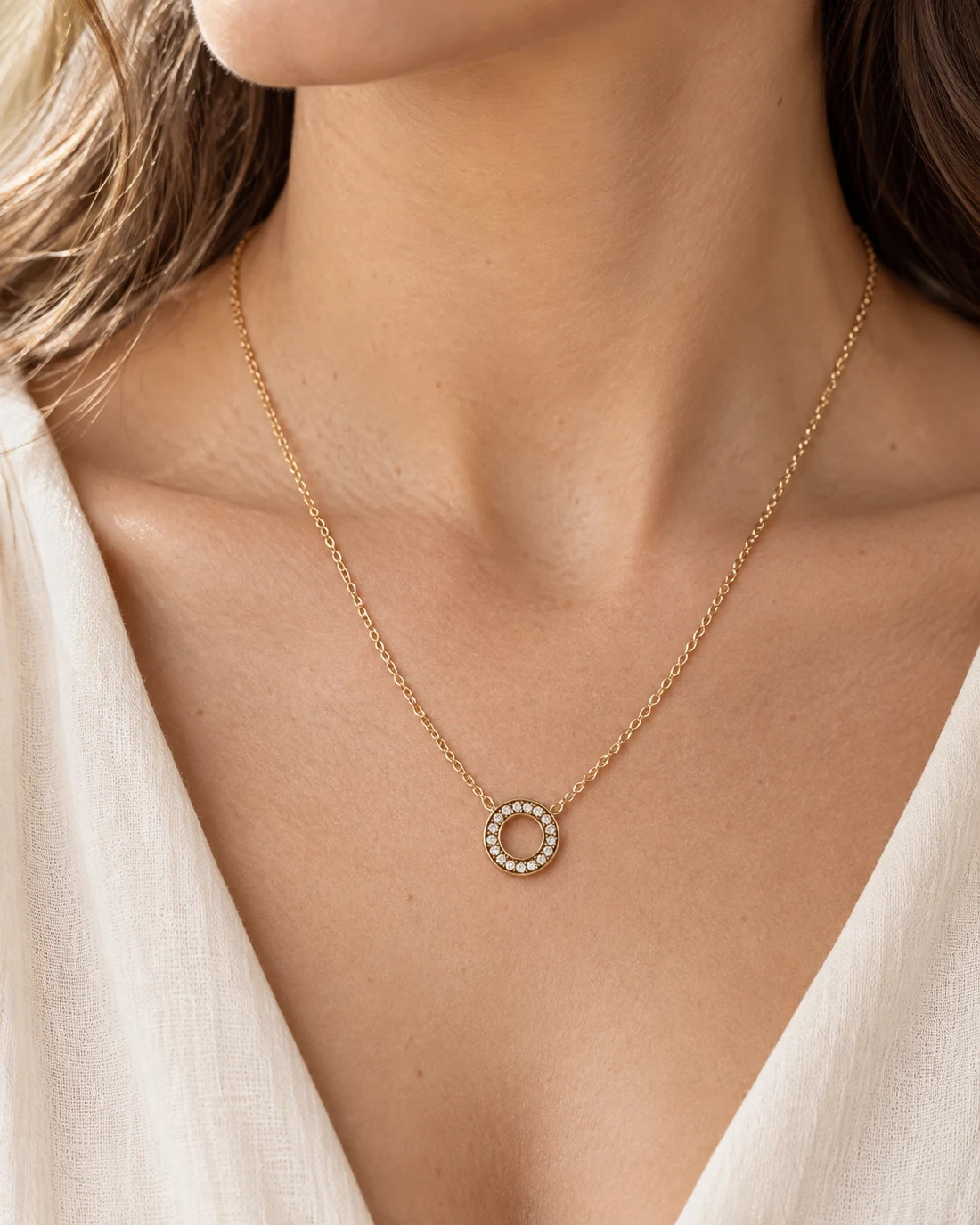
Halo necklace
Explore the views, composition and available options on the product page.
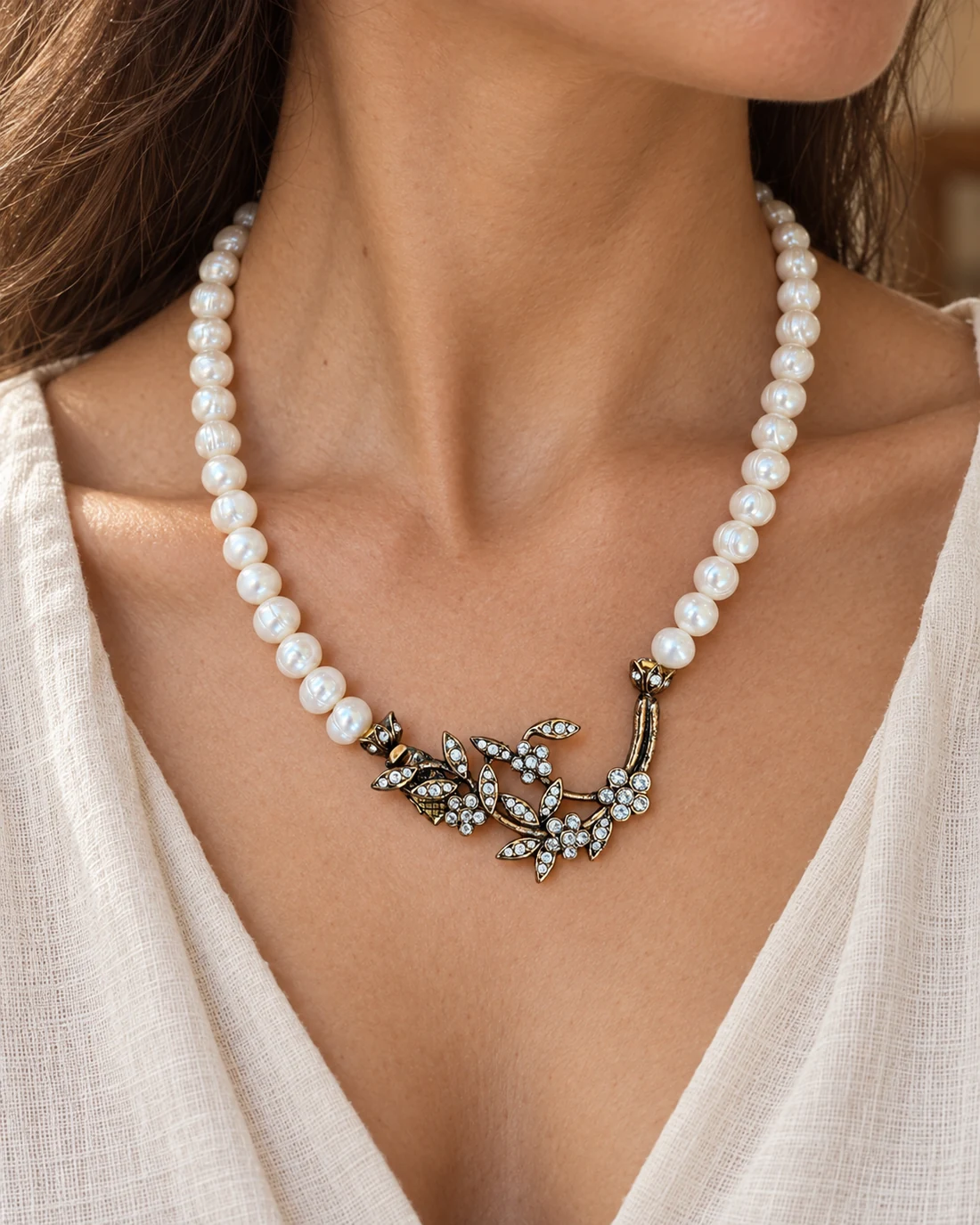
Floraison necklace
Explore the views, composition and available options on the product page.