SARA GUERNAY
How to wear an ear cuff and compose around the ear
Compare placement, fastening and shape to give an ear cuff a personal place alongside your usual jewellery.
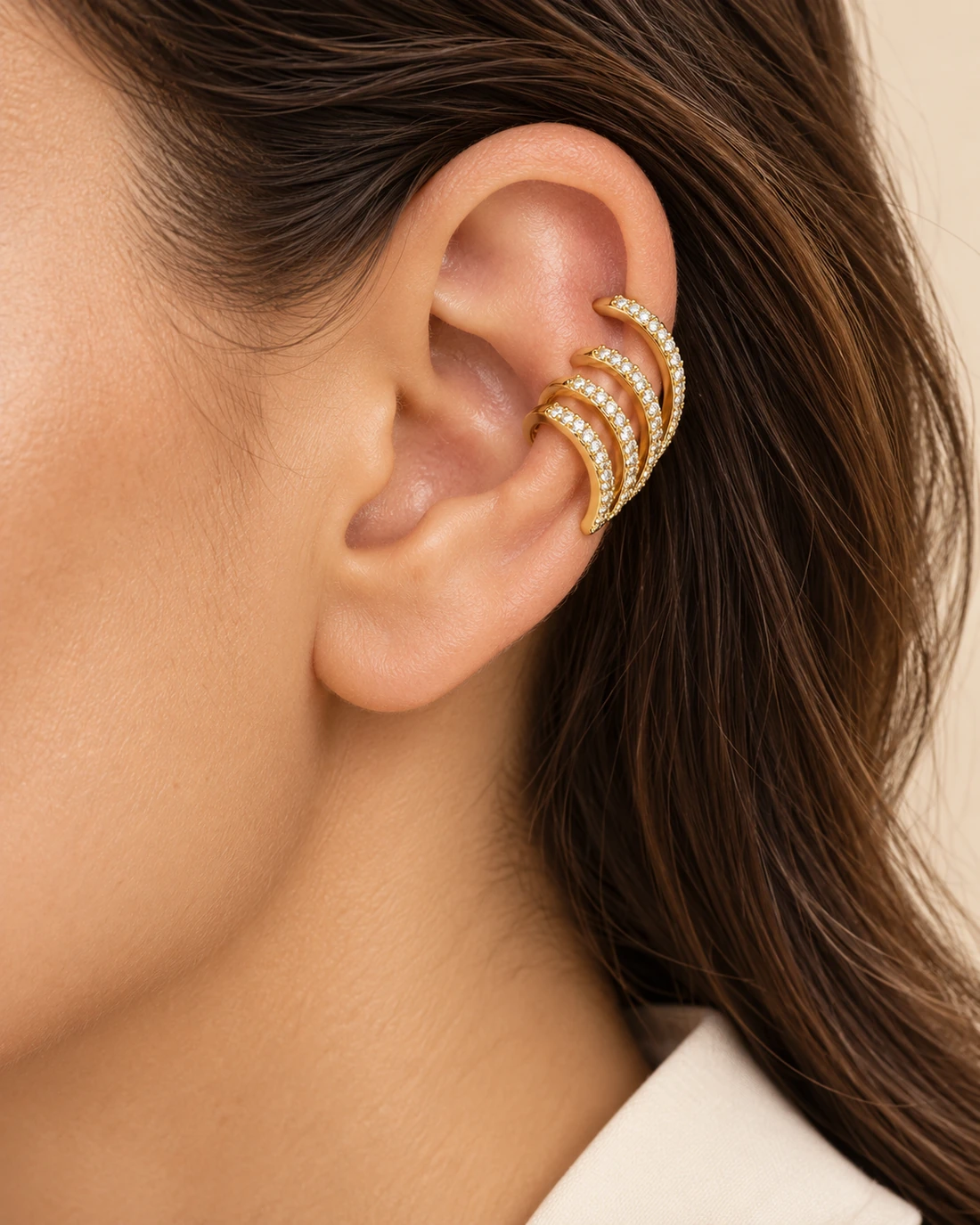
An ear cuff introduces a point of attention at a different place around the ear. You can choose one distinct line or compose it with earrings you already wear. Begin with the shape you like, then check how that particular model is placed and secured. A styling photograph is a reference rather than a universal position for every ear.
The Sara Guernay ear cuffs explore arcs, leaves, ovals and layered lines. This guide helps you compare those intentions while giving fit, fastening and movement their own place in the decision.
Start with the composition you wear already
Do you prefer one pair of earrings, several small details or a stronger accent on one side? An ear cuff can complement that habit or create a variation without replacing your whole collection. Picture it with a specific outfit and hairstyle, so you know which space you want to highlight.
Choose a model you also enjoy on its own. The design needs to appeal to you before you begin adding other accessories around it.
Read the fastening information for the model
Ear cuffs can have different constructions. Do not infer the attachment from the name alone. Consult the product information and detailed views. If you specifically need a piece suitable for an unpierced ear, ask the Maison to confirm this for the reference you are considering.
Do not force the jewellery into a place where it does not sit naturally. A question about a particular fastening is more useful than trying to reproduce an image with a different ear shape or an unsuitable position.
Compare an arc, an oval and a botanical motif
An open curve, repeated line and leaf bring different rhythms. Look at the spaces between the elements and the way their outlines meet. Arc offers curved lines, while Feuille provides a botanical direction. You can choose harmony with other jewellery or use a distinct shape as a contrast.
Imagine each piece with familiar clothes. A leaf can soften a structured jacket; a graphic curve can punctuate a fluid blouse. These are styling possibilities, not categories that restrict how you dress.
Use your hairstyle to reveal the design
Lift the hair or tuck a few strands back to compare the outlines clearly. Look at both profiles and then at the whole outfit. With loose hair, the piece may appear only as you move. If you prefer that quieter presence, you do not need to change your usual hairstyle.
Think about everyday movements: putting on glasses, moving a strand behind the ear or lifting a scarf. The combination should remain comfortable in those moments as well as in a photograph.
Add earrings one piece at a time
Begin with the earrings you wear most. Add the ear cuff and check that each drawing keeps its space. A sculpted pair may suggest a different balance from a simpler outline. Shared curves can connect the pieces; contrast can also work when it feels intentional.
Our earring guide helps you choose that first pair. You can also try a more expressive arrangement on one side and leave the other quieter. Modify one element at a time so you can recognise what changes the result.
Keep finish, material and practical needs separate
A gold-coloured, silver-coloured or contrasting appearance does not establish the composition. Check the reference rather than applying information read on a ring or bracelet to the entire ear cuff category. Ask about a missing characteristic if it matters to your choice.
Consider glasses, headsets and phone use before adding more pieces. Keep a suitable small container available if you need to remove the jewellery. For a broader approach, our guide to choosing jewellery for your style starts with clothes and habits. Dune, Feuille and Arc below offer three different designs to explore at your own pace.
Pieces to discover for your selection
Dune ear cuff
Explore the views, composition and available options on the product page.
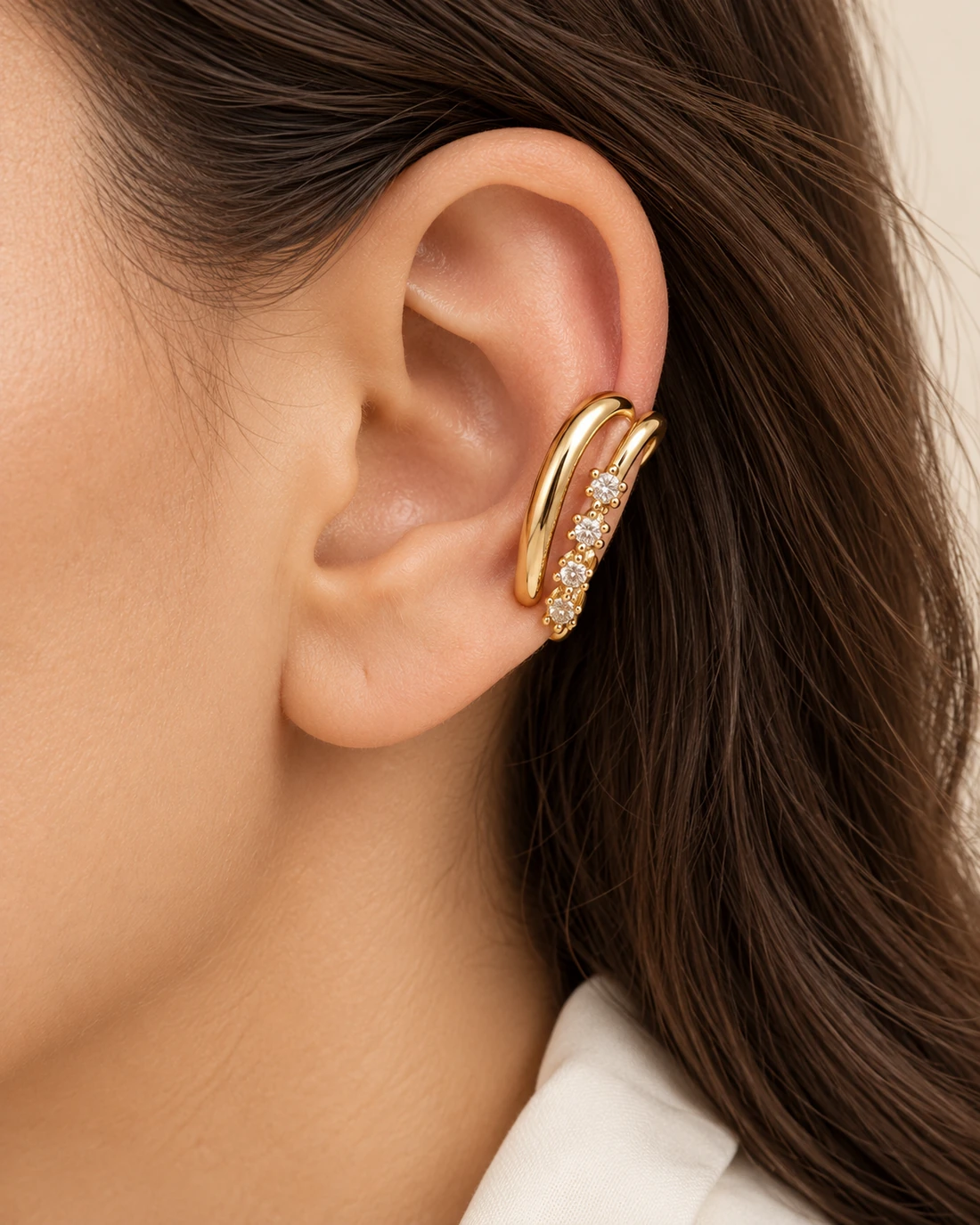
Feuille ear cuff
Explore the views, composition and available options on the product page.
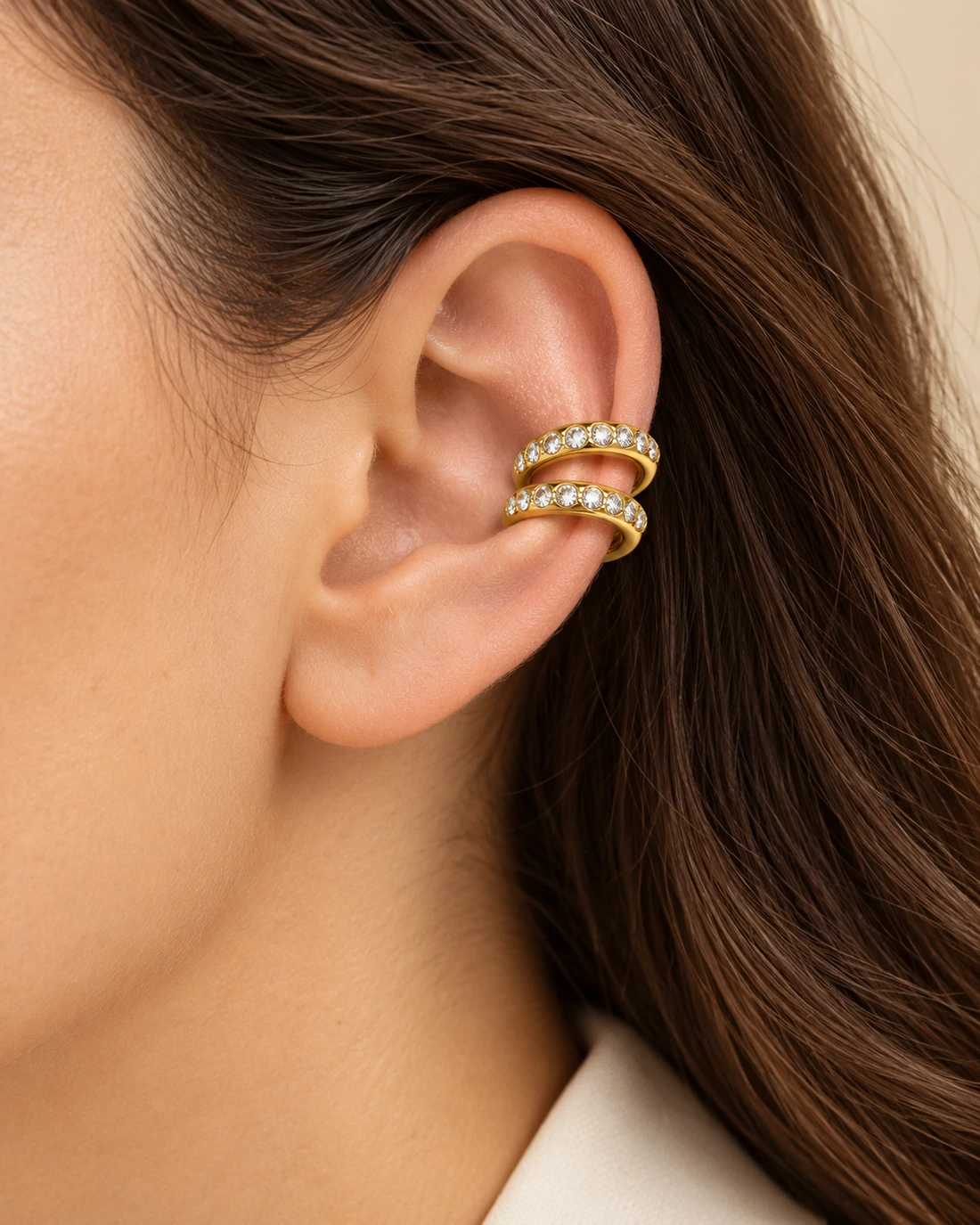
Arc ear cuff
Explore the views, composition and available options on the product page.